Same Sawaal, Alag Jawab: The Gender Double Standard in Rishta Culture
Same age, same divorce, same success — praised in a man, punished in a woman. A hard look at the double standards in rishta culture, why they aren't religion, and why they were never your fault.
Ek hi baat. Ek hi umar. Ek hi situation. Lekin jab jawab dene ki baari aati hai — to ladke ke liye alag, aur ladki ke liye alag.
We don't always notice it, because we've heard it our whole lives. The same milestone — turning thirty, staying single, saying no, starting over, earning well — earns a man understanding and a woman a warning. Same question, two completely different answers.
Aaj hum wo farq saamne rakhte hain — not to blame anyone, but to name something that too many people have quietly carried as if it were their own fault. And one thing before we start: most of this isn't religion. It's culture, habit, and "log kya kahenge" wearing religion's clothes. Keep that in mind as we go.
1. Turning 30 and still single
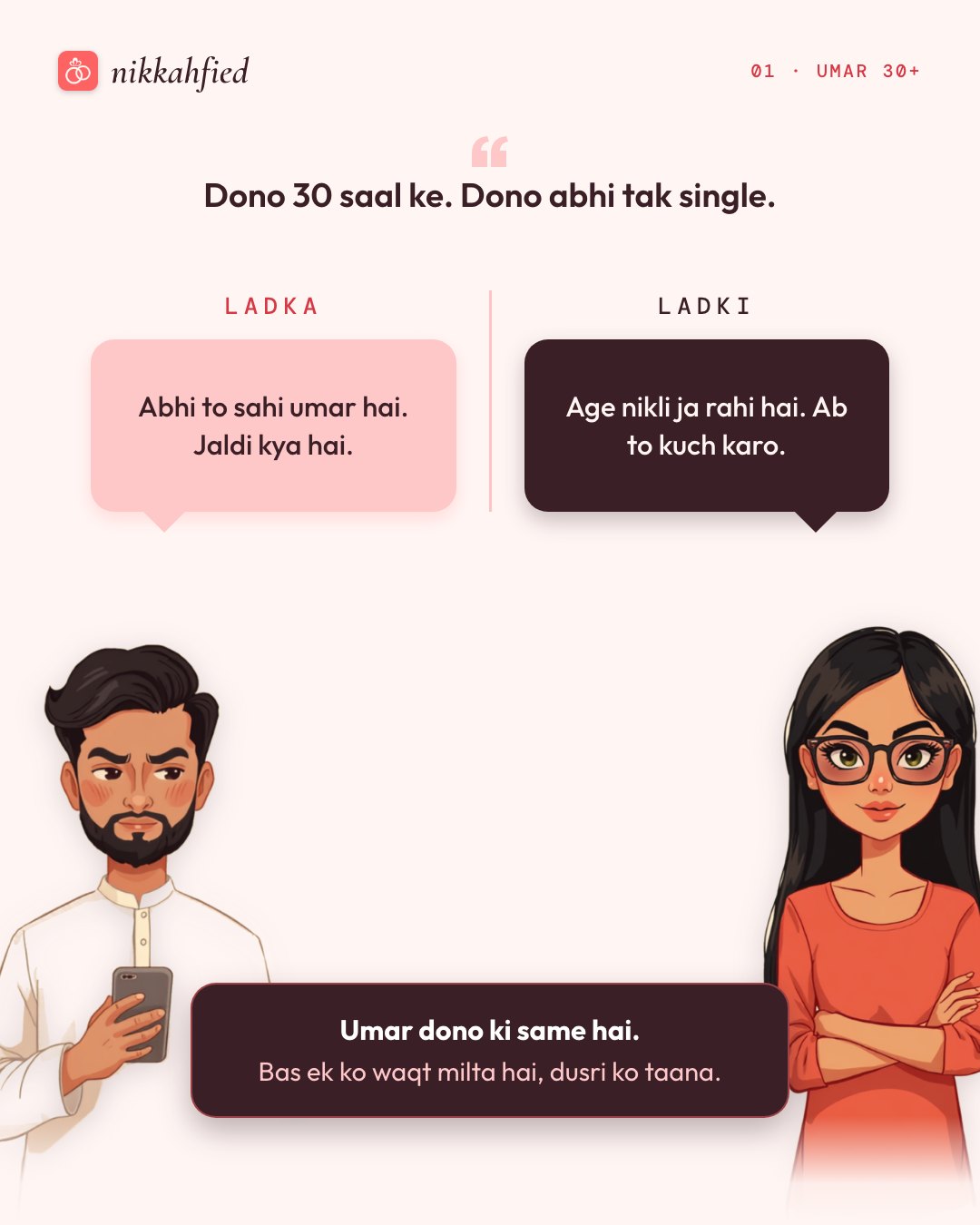
Dono 30 saal ke. Dono abhi tak single.
- Ladka: "Abhi to sahi umar hai. Jaldi kya hai."
- Ladki: "Age nikli ja rahi hai. Ab to kuch karo."
The clock ticks the same for everyone, but we don't read it the same way. When a thirty-year-old man is unmarried, the room relaxes — he's allowed to be selective, to wait for the right time, to settle down "when he's ready." When a thirty-year-old woman is unmarried, the room tightens. Suddenly there's a deadline nobody agreed to, and she's already late for it.
The panic is outsourced entirely to her. Meanwhile his single years are treated as preparation, not loss. Umar dono ki same hai — bas ek ko waqt milta hai, dusri ko taana. The calendar was never the problem. The commentary is.
2. "Why aren't you married yet?"
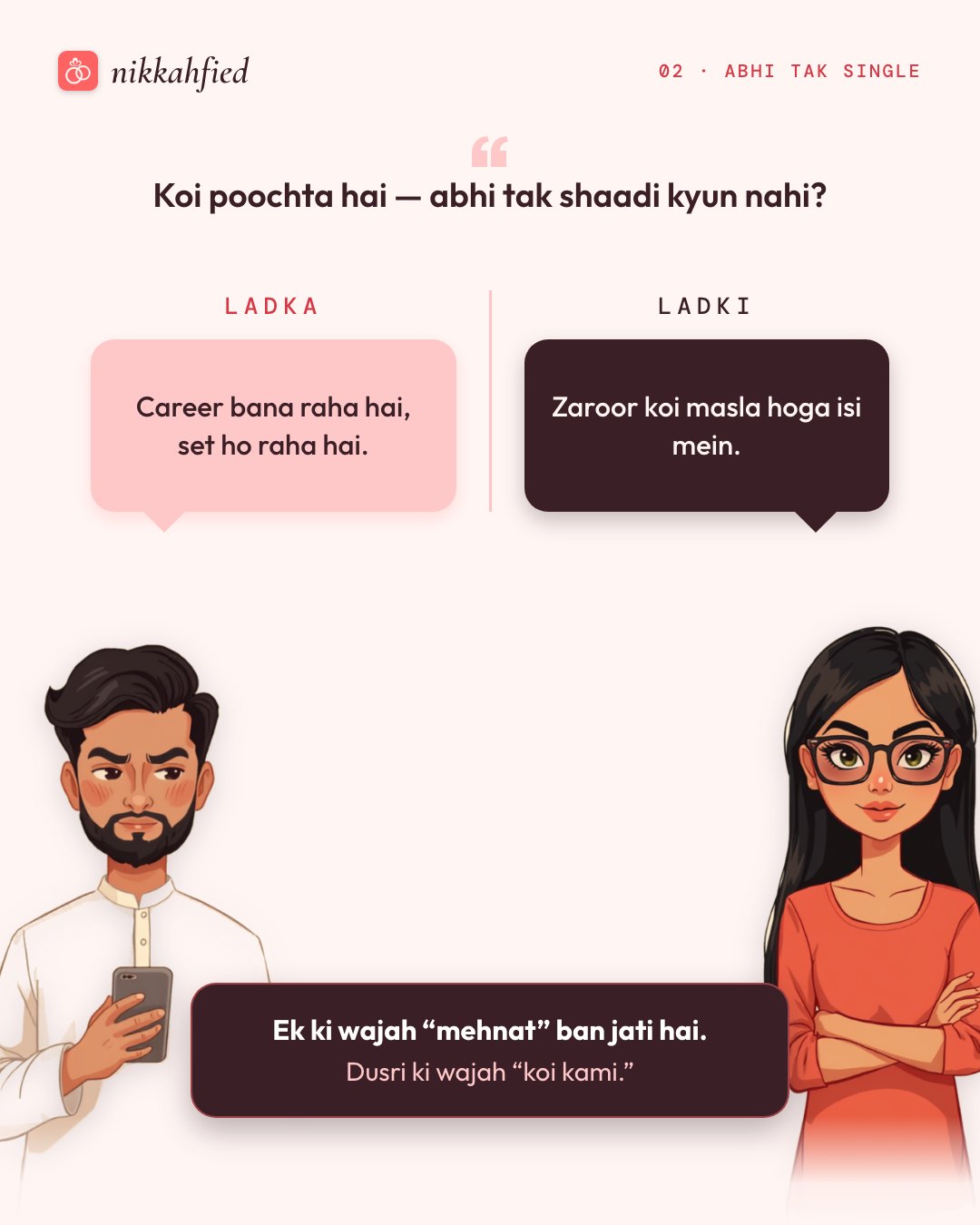
Koi poochta hai — abhi tak shaadi kyun nahi?
- Ladka: "Career bana raha hai, set ho raha hai."
- Ladki: "Zaroor koi masla hoga isi mein."
When people ask a man why he isn't married, they answer for him kindly: he's focused, he's building something. His singleness becomes proof of ambition. When they ask a woman, they answer darkly — her singleness becomes proof of a flaw, something hidden, something "wrong" with her.
Nobody audits his personality or his past. Hers goes under a microscope: too educated, too independent, too "modern," must be difficult. Ek ki wajah "mehnat" ban jati hai, dusri ki wajah "koi kami." The possibility that she is simply living her life and waiting for the right person — the exact reason we happily grant him — is the one explanation she rarely gets.
3. Saying no to a rishta
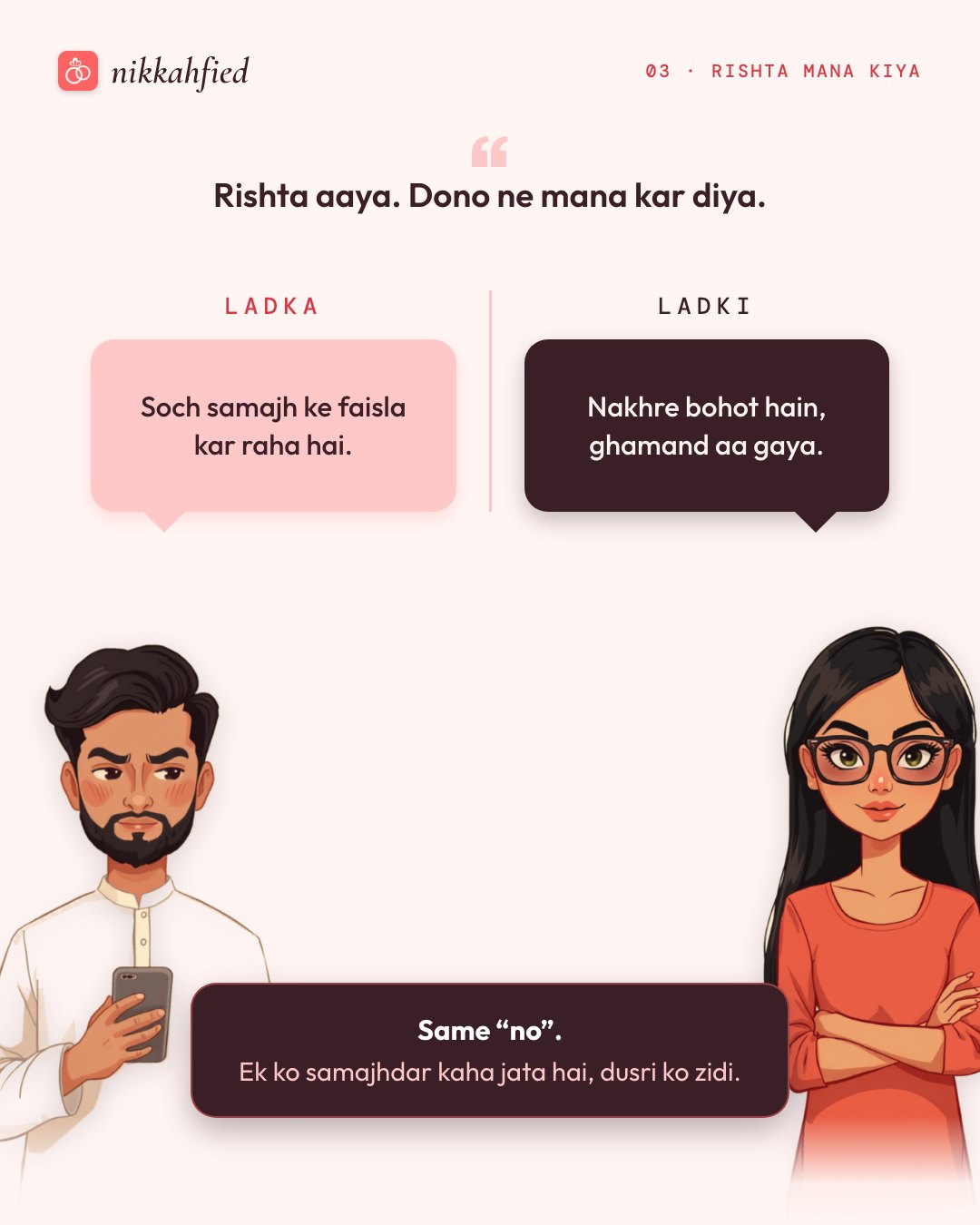
Rishta aaya. Dono ne mana kar diya.
- Ladka: "Soch samajh ke faisla kar raha hai."
- Ladki: "Nakhre bohot hain, ghamand aa gaya."
Turning down a proposal is a normal, healthy thing to do. But the exact same "no" is read in opposite directions. From him it's thoughtful and mature. From her it's arrogant, spoiled, ungrateful.
The message underneath is old and ugly: a man is allowed standards, while a woman is expected to be grateful for whoever shows up. Baar-baar mana karne ka matlab yeh nahi ke usay apni qadar ka pata nahi — matlab yeh hai ke usay apni qadar ka pata hai. Same faisla, alag naam. Knowing what you want should never cost a woman her reputation.
4. Starting over after divorce
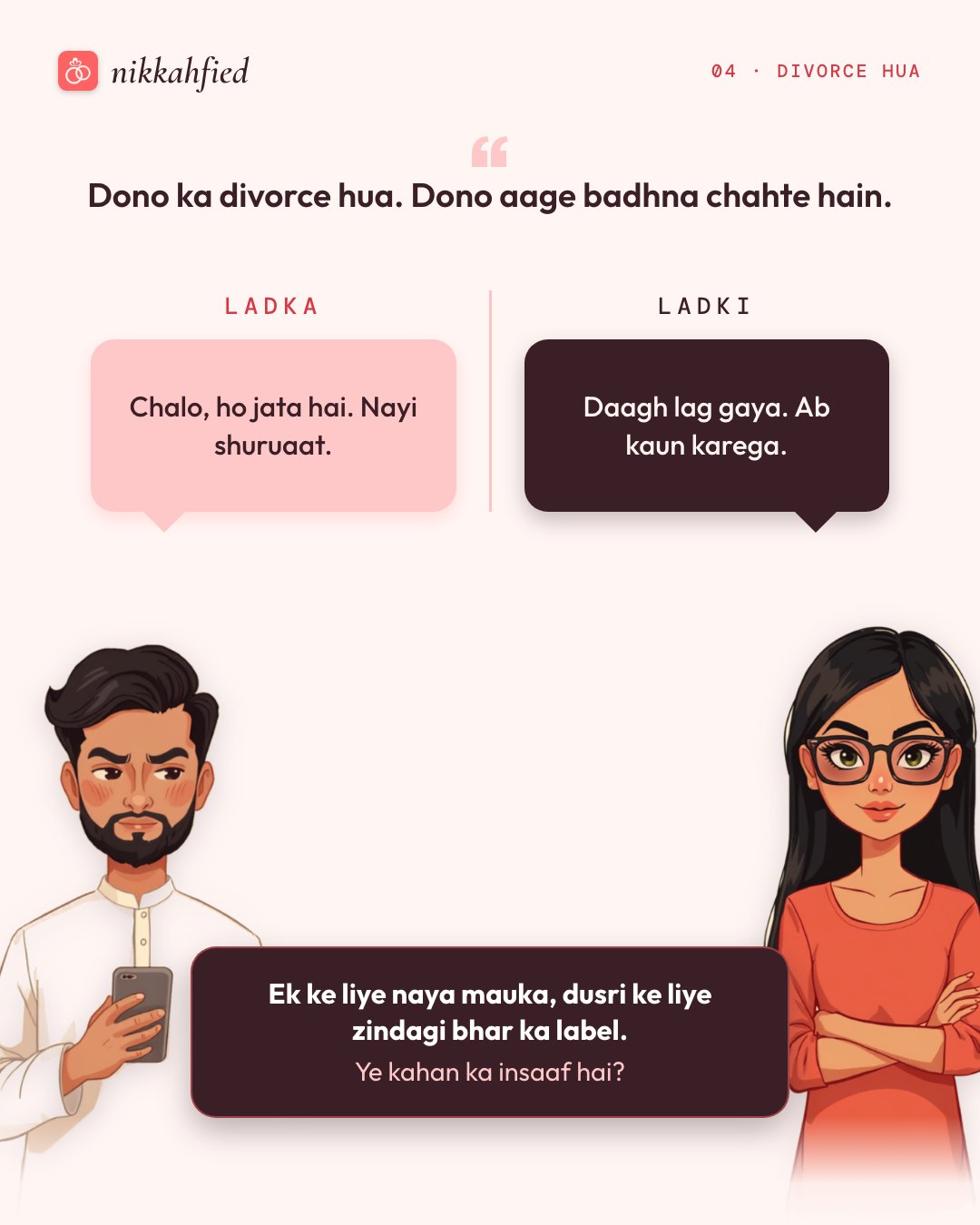
Dono ka divorce hua. Dono aage badhna chahte hain.
- Ladka: "Chalo, ho jata hai. Nayi shuruaat."
- Ladki: "Daagh lag gaya. Ab kaun karega."
A divorce is the end of a relationship that wasn't working — for both people, equally. But we grieve it differently on their behalf. For him it's a clean slate and a second chance already lining up. For her it's treated as a permanent stain, as if the marriage marked her forever.
The word "daagh" does something violent: it turns an experience into an identity. He went through a divorce; she becomes one. Ek ke liye ek band hua chapter, dusri ke liye zindagi bhar ka label. A woman who chose peace over a broken marriage made a brave decision, not a shameful one. Ye kahan ka insaaf hai ke himmat ko daagh keh diya jaye?
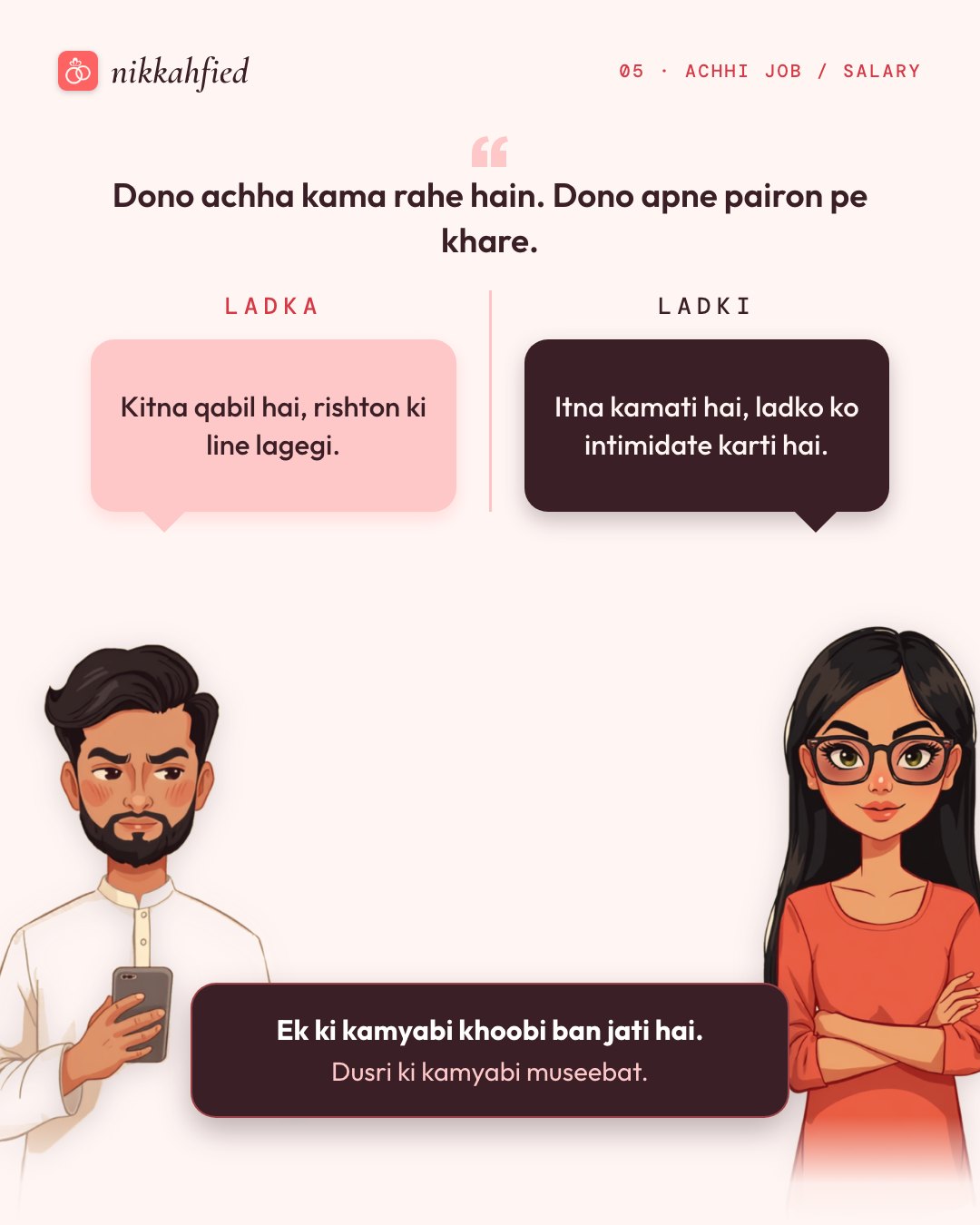
5. Earning well and standing on your own feet
Dono achha kama rahe hain. Dono apne pairon pe khare.
- Ladka: "Kitna qabil hai, rishton ki line lagegi."
- Ladki: "Itna kamati hai, ladko ko intimidate karti hai."
Money and independence should be good news for a marriage — and for a man, they are. His success is a magnet. For a woman, the very same success is reframed as a threat.
Read that again: her achievement is described as a problem she creates for men, rather than something to admire. She's quietly told to shrink — earn a little less, speak a little softer, achieve a little quieter — so a fragile ego somewhere can feel bigger. Ek ki kamyabi khoobi ban jati hai, dusri ki kamyabi museebat. A partner worth having isn't intimidated by your success. He's proud of it.
Where does this thinking actually come from?
Here's the part worth saying plainly: none of this is deen. Islam gave women the right to choose their partner, to refuse a proposal, to own their wealth, and to remarry with full dignity — centuries before it was fashionable anywhere else. What we've been describing isn't religion. It's culture, inherited habit, and "log kya kahenge" borrowing religion's authority.
That matters, because a double standard survives on repetition, not on truth. It gets passed down because people keep saying it, not because it was ever right. And anything that lives on repetition can die the moment we stop repeating it.
The question was never the problem
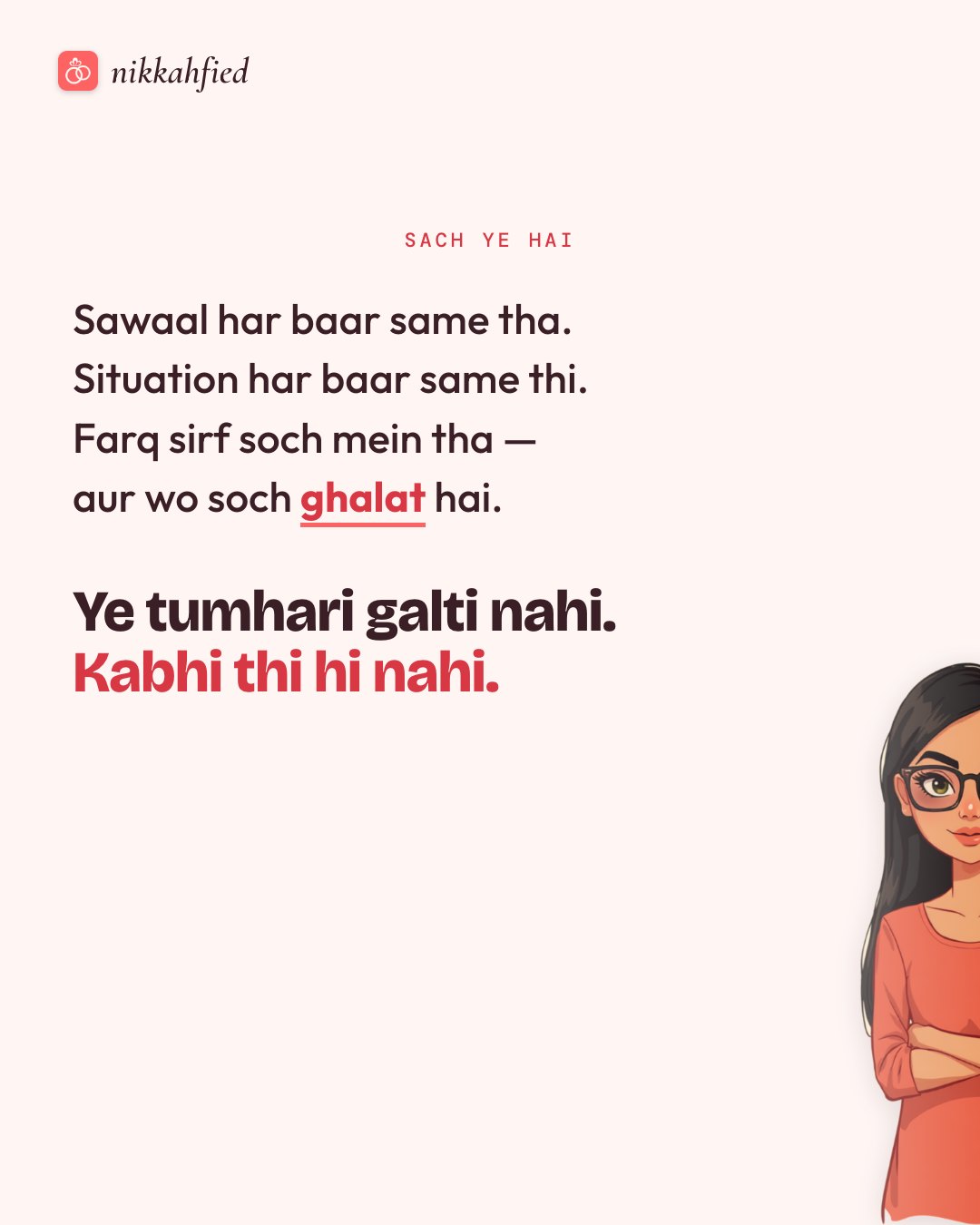
Look back at all five. The situation never changed. Sirf soch badalti rahi. Same age, same decision, same success — only the interpretation flipped. And interpretation is a choice.
Agar aap wo insaan hain jise umar ka taana mila, jise "daagh" kaha gaya, jiski kamyabi ko museebat samjha gaya — to yaad rakhiye:
Ye aapki galti nahi. Kabhi thi hi nahi.
What actually changes it
- Name it out loud. Jab same baat pe ladke aur ladki ko alag tola jaye, usay politely but clearly point out karein. Double standards lose their power when someone says them out loud.
- Don't internalise the label. A taana repeated a hundred times is still just a taana — not a fact about you.
- Choose spaces that treat you as an equal. The people, families, and platforms you give your time to should hold men and women to the same standard.
A different kind of platform
That last point is exactly what Nikkahfied is built on. Yahan sawaal same hai, aur izzat bhi same. Whether you're a man or a woman, a first marriage or a second, focused on your career or ready to settle down — you're met with the same respect and the same seriousness. No "daagh," no "taana," no double standard dressed up as tradition. Just serious people looking for a serious nikkah.
Serious About Nikkah? So Are We.
Frequently asked questions
What is a double standard in rishta culture? It's when the same situation — an unmarried 30-year-old, a divorce, a high salary, a rejected proposal — is read positively for a man and negatively for a woman. Same sawaal, alag jawab.
Is treating men and women differently in marriage part of Islam? No. These are cultural habits, not religious teachings. Islam gives women the right to choose, refuse, own their wealth, and remarry with full dignity. The double standard is culture and "log kya kahenge," not deen.
Is it really "too late" to marry after 30 or after a divorce? No. There is no expiry date on marriage for anyone. A later marriage or a second marriage can be just as fulfilling — the "deadline" and the "daagh" are social pressure, not reality.
How should I respond when relatives use these double standards on me? Name it calmly, don't absorb the label as truth, and set boundaries around who gets to comment on your life. Spend your energy on people and platforms that treat you as an equal.
How is Nikkahfied different? Nikkahfied is built for serious, marriage-minded Muslims and holds everyone to the same standard — same questions, same respect — whether you're a man or a woman, a first marriage or a second.
Ready to start your Nikkah journey?
Join thousands of marriage-minded Muslims on Nikkahfied.
Download Nikkahfied Free